Finally A Real Photoshop Alternative, And Its Free For Mac
Open source and available for free, it's a great alternative to an expensive Photoshop license or a Creative Cloud subscription. Experienced Adobe users, however, might have some trouble getting used to the GIMP interface and keyboard shortcuts. Let's make GIMP look and work like Photoshop, with just a few tweaks. Unblock any international website, browse anonymously, and download movies and Mp3 with complete safety with CyberGhost,: All the changes below are for GIMP 2.8.22, which is at the time of this writing. Some of them might not work well for earlier or later versions of GIMP. For more Photoshop alternatives, check out our guide. Fortunately, it's quick and easy to get a GIMP that looks and works more like Photoshop.
- Finally A Real Photoshop Alternative And It's Free For Mac
- Finally A Real Photoshop Alternative And Its Free For Mac Pro
- Finally A Real Photoshop Alternative And Its Free For Mac Free
We just visit and download the Gimp 2.8 Photoshop Tweaks file. Then, we press the Windows Key + R and type into the Run command window:%userprofile% Inside our user profile folder, we rename the.gimp-2.8 folder to anything else, e.g.gimp-2.8 backup Finally, we extract the tweaked.gimp-2.8 folder from the zip to our profile folder. Remember this folder, we will be using it a lot as we make GIMP like Photoshop.
Before the tweak, GIMP looked like this by default. Now, GIMP is much more like Photoshop. We get the Photoshop tools icons, the dark background.and the panels on the right in a much different arrangement.
We also get the Photoshop keyboard shortcuts. An alternate method to get GIMP more like Photoshop CS6 The above theme makes GIMP look better than the default, but it still doesn't look much like Photoshop, at least not the latest version of the app. For those who are sticklers for detail, there is an alternate way to get GIMP much more like Photoshop CS6.
But it's a bit more complicated to install. Get a special, dark-themed GIMP Firstly, we need to download a different, dark-themed built of GIMP. Not from the official website, but from.
Since GIMP is an open source app, any programmer can create their custom version. It is actually legal to do so. We will find the downloads near the end of the homepage. Make sure you download the stable 2.8 version, instead of any of the 2.9.x versions. Even though it's marked as a 'Standard Edition', when run it features the following message, since it is based on as of yet unstable versions of the GIMP source code: We also need to have 64-bit Windows to download this version, it won't install on 32-bit Windows. If we already had GIMP, we should uninstall it, and install the Partha build instead.
Don't try to combine this alternate method with the method above, it needs a clear installation. With the Partha build installed, we need to run it once, to create the gimp settings folder.
We can check for it at our User profile folder, as we saw earlier. Install GIMP themes For the next step, we download the.
After the download, we extract all the directories within the Clearlooks zip inside the '.gimo-2.8/themes' folder. The current version of Clearlooks includes 29 directories.

With the extra themes copied, we launch GIMP, select Windows - Single-Window Mode.and then choose the theme, from Edit - Preferences - Theme. The best fit is probably the Dark Blue small theme, but feel free to select whichever you like best. After that, we close GIMP, re-open it, and we have an appearance much more like Photoshop CS6. We just need to drag the tools Panel to the upper right column and afterwards shrink the left tools panel, so it only has two rows. With this, we are ready, as far as the appearance is concerned. How to make GIMP work like Photoshop Having GIMP looking like Photoshop is fine.
But if we can have it support more of Photoshop's functionality, it's even better. The following tips can be applied to both of the above theme methods. How to install Photoshop Keyboard shortcuts on GIMP Doctormo's theme has the Photoshop keyboard shortcuts pre-installed. For the alternative CS6 theme, we need to install them manually. We just need to visit and download ps-menurc. You should not click on the link because the browser will open it as a text file.
Instead, right-click and select 'Save link as.' You should not click on the link because the browser will open it as a text file. Instead, right-click and select 'Save link as.' To install it, firstly we need to have the extensions for the known file types shown. It is as easy as going to the View menu and checking 'File name extensions' on Windows 8.1 and Windows 10.
For Windows 7, we will find the same option at Organize - Folder and search options - View, by unchecking the 'Hide the file extensions for known file types'. The ps-menurc file we downloaded has a.txt extension. We must rename it to menurc and remove the extension, no matter how much Windows might nag about it.
Finally, we rename the menurc file inside.gimp-2.8 to something else, e.g. Menurc-backup.and then copy the new menurc file we downloaded. We now have Photoshop shortcuts on GIMP. On, we will find a list with all of GIMP's shortcuts, and how they compare with Photoshop's shortcuts. Turn on the 'Snap to Canvas Edge' option by default GIMP can snap layers to canvas or the grid when moving them, like Photoshop. However this option is not turned on by default, and it doesn't even have a shortcut.
To make this the default behavior, we enter the.gimp-2.8 folder in our user profile and open the gimprc file with notepad or any other text editor. At the bottom of the file add the following, and then save and close the file. (default-snap-to-canvas yes) (default-snap-to-grid yes) Next time we start GIMP, both options are checked by default. Disable the layer boundary Every selected active layer on GIMP is surrounded by a black and yellow dotted line. If we don't like that, we can go to Edit - Preferences - Image Windows - Appearance and uncheck the 'Show Layer Boundary' in both Normal and full-screen Mode. If we had an image file open, we must close it and reopen it to see the change. Change how the Move Tool works The Move Tool in GIMP will pick a Layer or Guide to move instead of moving the active layer.
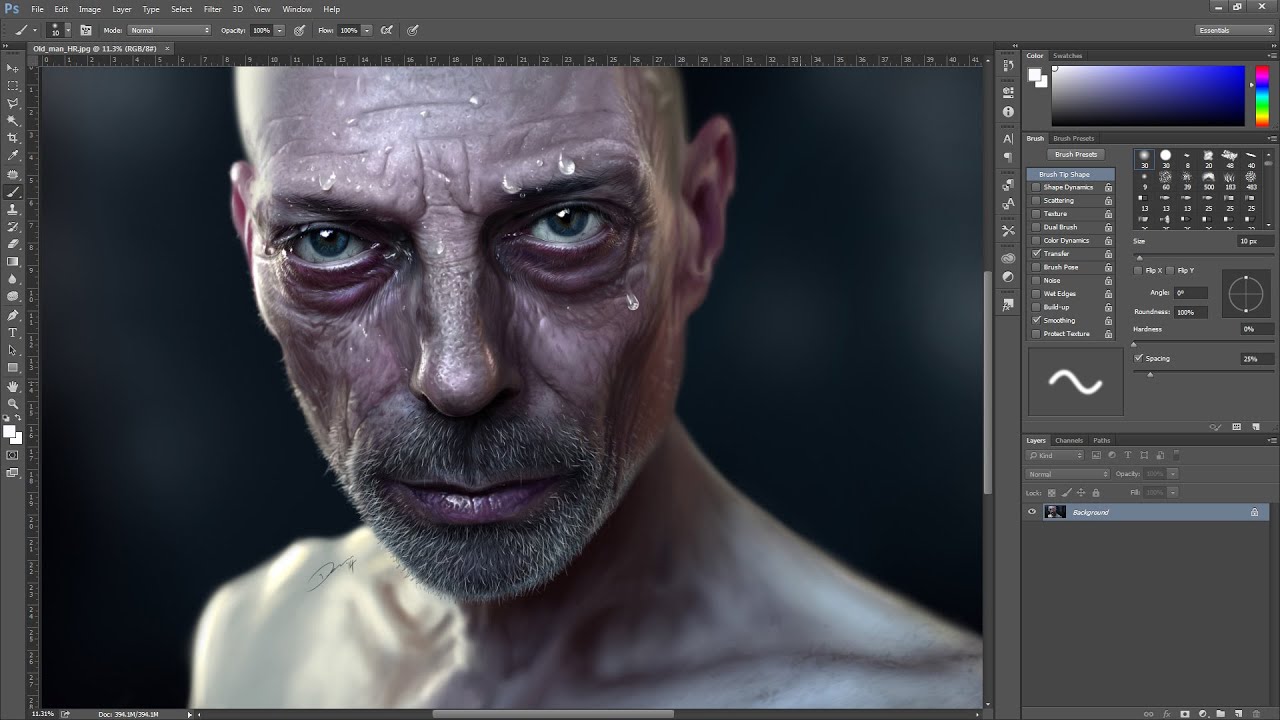
Longtime Photoshop users might find it hard to get used to this behavior. To change the default, with the Move Tool selected, we choose the 'Move the active layer' option.and then we go to Edit - Preferences - Tools Options - Save Tool Options Now. We can also uncheck the 'Save tool options on exit' so that we can have the default option every time we start the program.
Essential plug-ins for GIMP to work like Photoshop GIMP has a powerful plugin system. In our quest to make GIMP more like Photoshop, a couple of plugins are essential. Get the Content Aware Fill back to GIMP The 'Content Aware Fill' is a handy option in the latest versions of Photoshop.
It allows us to delete an element from a picture in a smart way, with the program automatically filling in the blank according to the rest of the image. What you might not know is that this feature originated as a GIMP plugin called 'Resynthesizer'. It was later that Adobe incorporated this functionality in Photoshop. To get the full Content Aware Fill for GIMP, we need to download the plugin set from GitHub. The 'resynthesizer-master.zip' we download contains multiple folders and files. We only need the.py files from the PluginScripts folder. We copy them to the '.gimp-2.8/plug-ins/' folder.
With the above plugins set we can:. Heal (reconstruct) a selection from nearby pixels: Filters - Enhance - Heal selection. Heal (reconstruct) transparent areas from nearby pixels: Filters - Enhance - Heal transparency. Transfer the style (color and texture) from one image to another: Filters - Map - Style. Render seamless texture from one image into a new image: Filters - Render - Texture. Enlarge an image using the resynthesizer to retain sharpness: Filter -Enhance - Enlarge & sharpen. Fill seamlessly with a pattern: Edit - Seamlessly fill with a pattern using synthesis.
Sharpen an image using the resynthesizer: Filters - Enhance - Sharpen by synthesis. Enlarge an image while retaining the point of view of the existing image by synthesizing an enlarging border: Filter - Enhance - Uncrop. Get a 'Layer via copy/cut' option In Photoshop, pressing ctrl+J or right-clicking and selecting 'Layer via copy' can create a new layer from the current selection. GIMP needs a plugin to have this functionality. We just download.
For the plugin to work, we copy the layer-via-copy-cut.py file to the.gimp-2.8/plug-ins/ folder. Now, at the Layer menu, we will find the Layer via Copy and the Layer via Cut options. Change the Splash Screen This is purely aesthetic, and it won't change anything in our use of GIMP, but it doesn't hurt either. We just, or create one ourselves if we feel like it. Whichever we choose, we must name it gimp-splash.png. Then we go to the C: Program Files Gimp-2.8 share gimp 2.0 images directory. We should backup the default gimp-splash.png, by renaming it to anything else, e.g.
Finally, we copy the new gimp-splash.png we downloaded or created to the images directory. Now, each time we start the program, we are greeted with the new splash screen. Why not use GIMPshop? GIMPshop started out as exactly what its name suggests, a GIMP version that looks like Photoshop from the get-go, without the need of manual theme installation. Unfortunately, there was some controversy regarding GIMPshop.
A random person other than the GIMPshop creator snatched the gimpshop.com domain name and started hotlinking to the original GIMPshop. This lead the true GIMPshop creator to not pursue a newer version of GIMPshop, other than.
He still updates is, though, with the latest update on February 2017. As for gimpshop.com (no, we won't even link to it, because screw this guy), it is riddled with adware, even before we download the file.
We definitely don't recommend it. Do you like having GIMP like Photoshop? Do you like to have the familiar environment? Or do you prefer to use GIMP with a different environment, and don't see much use in trying to mimic Photoshop? Let us know in the comments below.
Finally A Real Photoshop Alternative And It's Free For Mac
Relevant Posts. Support PCsteps Do you want to support PCsteps, so we can post high quality articles throughout the week?
You can like our, share this post with your friends, and select our affiliate links for your purchases on. If you prefer your purchases from China, we are affiliated with the largest international e-shops:.
Advertisement Photoshop is the most famous image editing application in the world; its name has become a verb. It’s the industry standard, the most powerful, and generally just the program to use if you’re serious about image editing. It isn’t, however, the only app out there. The free and open source GIMP — the GNU Image Manipulation Program — Photoshop is the most popular image editing app out there and GIMP is the best free alternative to it. Which should you use? Although it GIMP can do a lot of what Photoshop can do, but there are some areas it falls short. Here is a summary of the key differences.
It’s also not very easy to use or pretty to look at. For Mac users, however, there’s another option. For a fraction of the cost of Photoshop you can get an app that’s intuitive to use, runs great on OS X, and has a lot of powerful features. Let’s look at when Pixelmator might be the better choice than Photoshop. In the Red Corner Pixelmator Pixelmator is a Mac-only image editing app. With Pixelmator you can edit images, draw or paint digital artworks, composite multiple shots, retouch pictures, and do everything else you’d expect from a fully featured image editing app.
Pixelmator has Ever since we first featured Pixelmator in March 2010, it has been improved in so many ways. It's pretty much the affordable Photoshop alternative for Mac. We're giving away 25 copies of the latest version. With every fresh update it’s improved and now it’s a real contender for the best Mac image editing app for most people. If you want to check it out, you can download a free trial.
Finally A Real Photoshop Alternative And Its Free For Mac Pro
And in the Blue Photoshop Photoshop is the image editor everyone knows. Since Adobe’s introduction of the, it’s been impossible to buy Photoshop on its own. Instead, it comes as When most people think of Adobe, they either think of Photoshop or Acrobat Reader. But the company has a plethora of other useful software packages that most people know nothing about. Bundled together at different prices. The best deal is the $9.99 a month Photography package that has Photoshop and Photoshop Lightroom, although you can spend up to $49.99 a month to get every app in the Creative Cloud. Photoshop has been around since the 90s and has slowly built itself into the industry powerhouse it is today.
However, with its focus on professional users, it may do too much for regular people. Just as with Pixelmator, you can get a free Photoshop trial. Where Pixelmator is Great Pixelmator is a great casual image editor. If you have a website or blog and need to upload images to it, it’s perfect for resizing and tweaking them. Adding a text overlay, adjusting an image’s brightness, or scaling them to different sizes are all incredibly intuitive with Pixelmator. There are quite a few MakeUseOf writers who use Pixelmator to edit their images for the site.
Finally A Real Photoshop Alternative And Its Free For Mac Free
Pixelmator is also a fraction of Photoshop’s long-term cost. You can buy Pixelmator for a quarter of Photoshop’s annual cost. It’s not free, but $30 is a very reasonable price for the app. You get a lot of bang for your buck. You can also learn a lot using Pixelmator.
Although I’ve done all my image editing tutorials — like the Want to create awesome composite images? We should you how with this easy-to-follow free Photoshop tutorial. And With Halloween on the way, now is the time to start sharing spooky photos on Facebook. Here's how to freak out your friends!
— using Photoshop, you can follow along almost as easily with Pixelmator. If you want to learn the theory behind image editing, digital painting, or anything else done in Photoshop, it’s a great place to start. If you start working professionally, you can always change to Photoshop.
Pixelmator is built just for OS X. This means it can use a whole host of resources that a multi-platform app like Photoshop can’t. Pixelmator follows the same design language as the rest of OS X, it uses Apple’s technologies like iCloud to sync rather than a specially built service, and it’s created with Mac users in mind. Most things are intuitive.
If you just use Macs, this can be a big advantage. Where Photoshop is Better Pixelmator, however, isn’t perfect. Although it’s a worthy competitor to Photoshop in many ways, there are some areas it just can’t compete. Pixelmator can’t handle RAW image files.
This is a problem if you’re a photographer. It also doesn’t have the cataloging and sorting power of Lightroom or Bridge (which both come with Photoshop). If you want to edit one image every now and again, Pixelmator is great. If you need to sort and edit 500 images from a photoshoot using it, you’ll want to put your head through your desk.
Designers are also better served by Photoshop and the other apps in Adobe’s Creative Cloud. While Pixelmator’s drawing tools are fine, the app doesn’t support CMYK color — which is used by professional printers — and a few other important design specific features. Again, for people making a logo here and there Pixelmator will work fine, but if you need to regularly work with professional print shops you have to go with Adobe’s offering. On the subject of collaboration, that’s another area where Photoshop wins: it’s the industry standard.
If you want to work with professional retouchers, designers, or editors, you can practically guarantee they regularly use Photoshop. Yes, Pixelmator is somewhat compatible with Photoshop documents, but not to the same degree as the app they’re designed for. Pixelmator works if it’s just you using it, but if you’re collaborating with lots of other people on different systems you may run into issues.
Pixelmator is the only image editing all I’d ever consider using over Photoshop. But for a lot of people it’s right. — Harry Guinness (@HarryGuinness) Finally, there are plenty of powerful features that Pixelmator just doesn’t have. If you want to create animated GIFs, render 3D objects, automate your workflow with actions, or merge separate exposures into This guide outlines concepts involved in HDR photography followed by a logical progression of steps in the production of high dynamic range images., then you can’t use Pixelmator.
Which One is Right for You? Of all the Photoshop alternatives out there, Pixelmator is the one I feel most confident recommending. It’s simple to use, powerful, and fully-featured enough for most people. The biggest problem is it’s only available on OS X. If you’re a photographer or designer, or just someone who works with them regularly, then Photoshop is still the app to use.
It’s more powerful and widely supported. While Photoshop can do everything Pixelmator does, the opposite isn’t true.
Which image editing app do you use and why? Does Pixelmator do enough for you or do you need the power of Photoshop?
Let us know in the comments. Image Credit: by Prov910 via Shutterstock Explore more about:.